Are Self-Cleaning Litter Boxes Worth It? Honest Pros, Cons & Costs
Reader-supported: if you buy through links on this page, we may earn a small commission at no extra cost to you. As an Amazon Associate I earn from qualifying purchases. Learn more.
A self-cleaning litter box promises something every cat owner dreams of: no more daily scooping. But with prices ranging from around $150 to $800, it’s fair to ask: are self-cleaning litter boxes worth it, or are they an expensive gadget that ends up in the closet?
The honest answer: for the right home, they’re one of the best purchases a cat owner can make. For others, they’re a waste of money. This guide walks you through the real pros, the real cons, the hidden costs and exactly who should (and shouldn’t) buy one, so you can decide with confidence.
📋 In This Guide
- Are Self-Cleaning Litter Boxes Worth It? The Short Answer
- How Self-Cleaning Litter Boxes Work
- The Pros: Why Owners Love Them
- The Cons: What Nobody Tells You
- The Real Cost: Self-Cleaning vs Regular Litter Box
- Are Self-Cleaning Litter Boxes Safe?
- How to Get Your Cat to Use a Self-Cleaning Litter Box
- Which Self-Cleaning Litter Box Should You Buy?
- Frequently Asked Questions
- The Bottom Line
Are Self-Cleaning Litter Boxes Worth It? The Short Answer
Self-cleaning litter boxes are worth it if:
- You have two or more cats
- You work long hours or travel often
- Litter box smell is a problem in your home
- You have back pain, mobility issues or simply hate scooping
- You want to monitor your cat’s bathroom habits for health reasons
They’re probably not worth it if:
- You have one cat and don’t mind scooping
- Your cat is very nervous, elderly or a kitten under the size limit
- You’re on a tight budget
- You’re not willing to spend a week or two helping your cat adjust
Litter-Robot 4
Our favorite overall for multi-cat homes. Proven sifting system, advanced safety sensors, excellent odor control and an app that tracks each visit.
Short on time? This is the one we'd buy. Keep reading for alternatives.
How Self-Cleaning Litter Boxes Work
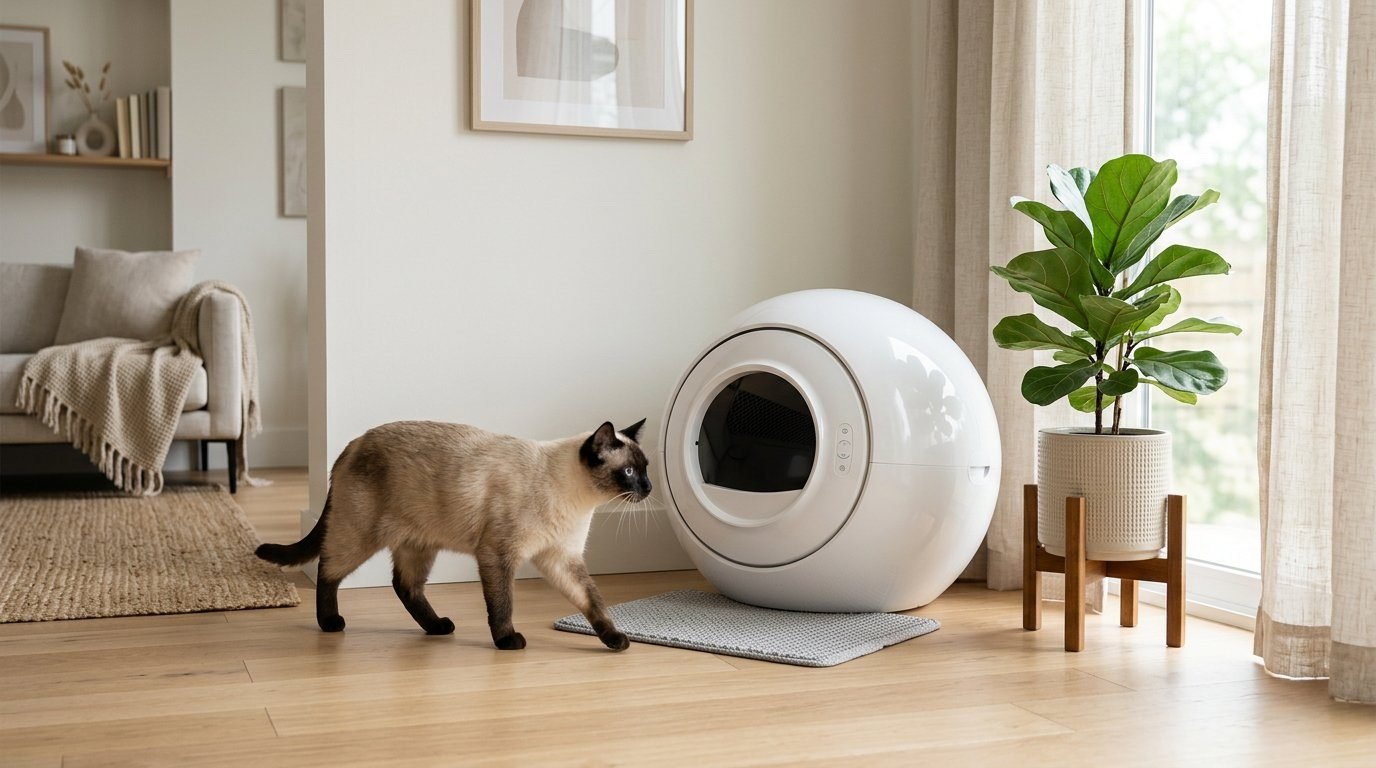
Most models use sensors to detect when your cat has left the box. After a short, adjustable delay, the box sifts the clumps out of the clean litter (by rotating, raking or tilting) and drops the waste into a sealed drawer or bag. You empty the drawer every few days to once a week, depending on how many cats you have.
Many newer models also connect to an app that tracks how often each cat uses the box, as well as their weight, which can alert you to health problems early.
The Pros: Why Owners Love Them
1. No more daily scooping
This is the big one. Instead of scooping once or twice a day, you empty a sealed drawer every few days. For multi-cat homes, that saves a lot of time over a year.
2. A cleaner box, all the time
Waste is removed minutes after each visit, so every cat walks into a clean box. Many cats avoid a dirty box, so this can reduce accidents outside the box.
3. Much less smell
Because waste is sealed away quickly instead of sitting in the open, most owners notice far less odor, especially helpful in apartments. (Our guide on getting rid of litter box smell has more tips.)
4. Health monitoring
App-connected models can track visits and weight. A sudden increase in bathroom visits can be an early sign of urinary problems, which are emergencies in male cats. Catching changes early can make a real difference.
5. Great when you’re away
A weekend away doesn’t mean coming home to an overflowing box.
The Cons: What Nobody Tells You
1. The price
Good self-cleaning boxes cost from about $150 to $800. For example, Whisker lists the Litter-Robot 4 at around $699 on its own website. Cheaper models exist, but reliability and safety vary a lot.
2. Ongoing costs
Some models need brand-specific bags, liners, filters or litter. Check this before you buy, since it can add up. Models that work with regular clumping litter are cheaper to run.
3. Some cats won’t use them
Most cats adjust, but some are scared of the motor noise or movement. A slow, patient introduction helps (see below), but there’s no guarantee.
4. Size and weight limits
Most boxes have minimum weight limits (often around 3 lb), so they’re not suitable for small kittens, whose weight may not trigger the sensors. Very large cats also need a model with a big enough entry and interior.
5. They still need cleaning
“Self-cleaning” isn’t “no-cleaning.” You still empty the drawer, top up litter and deep clean the unit every few weeks.
6. They take up space and need power
Most are much larger than a regular litter box and need a power outlet nearby.
The Real Cost: Self-Cleaning vs Regular Litter Box
| Regular box | Self-cleaning box | |
|---|---|---|
| Upfront cost | About $15–$60 | About $150–$800 |
| Daily time | Scooping 1–2x per day | About 2 minutes emptying a drawer every few days |
| Odor | Builds up between scoops | Waste sealed away quickly |
| Litter use | Normal | Often less, since only clumps are removed |
| Health tracking | None | Available on many app models |
| Best for | One cat, tight budgets | Multi-cat homes, busy owners, odor problems |
Are Self-Cleaning Litter Boxes Safe?
Quality models use multiple sensors to detect when a cat is inside or approaching, and they pause the cycle if a cat enters. Safety is the main reason to avoid ultra-cheap, unknown brands. Stick with established brands that clearly publish their safety features and cat weight limits, and follow the manufacturer’s instructions for weight settings.
How to Get Your Cat to Use a Self-Cleaning Litter Box
- Set it up next to the old box, switched off, with the same litter your cat already uses.
- Leave it off (manual mode) for a few days, so your cat uses it like a normal box.
- Turn on automatic cleaning once your cat is using it regularly. Some owners run the first cycles while their cat is in another room.
- Remove the old box only when your cat is using the new one consistently.
- Reward your cat with treats and praise near the new box.
Most cats adjust within one to two weeks.
Which Self-Cleaning Litter Box Should You Buy?
If you’ve decided it’s worth it, here are our favorites for different needs. For the full comparison, read our guide to the best self-cleaning litter boxes for multiple cats.
Best overall: Litter-Robot 4
Proven rotating sifting system, advanced safety sensors, excellent odor control and an app that tracks each visit. Whisker rates it for up to 4 cats and cats from about 3 to 25 lb.
Best for large cats and open-top design: Neakasa M1
An open-top design that many cats find less intimidating, with a big waste bin and support for cats from about 2.2 to 33 lb, according to the manufacturer.
Best for odor control on a mid-range budget: PETKIT PuraMax 2
Popular for its odor-control features and app, at a lower price than premium models.
Frequently Asked Questions
Are self-cleaning litter boxes worth it for one cat?
They can be, if you travel often, work long hours, have mobility issues or want health tracking. But the biggest benefits come with two or more cats.
Do self-cleaning litter boxes really stop smell?
They greatly reduce odor by removing waste quickly into a sealed drawer. You still need to empty the drawer on time and deep clean the unit regularly.
How long do self-cleaning litter boxes last?
Quality models from established brands typically last several years with proper care. Check the warranty length before buying; it’s a good sign of how confident the brand is.
Can kittens use self-cleaning litter boxes?
Most models aren’t recommended for small kittens because they’re under the minimum weight the sensors can detect. Use manual mode or a regular box until your kitten meets the manufacturer’s weight limit.
Do vets recommend self-cleaning litter boxes?
Many vets like that a clean box encourages consistent use, and that app tracking can reveal changes in bathroom habits early. Always talk to your vet if your cat’s litter habits change suddenly.
The Bottom Line
Are self-cleaning litter boxes worth it? For multi-cat homes, busy owners and anyone fighting litter box smell, yes, they’re one of the most life-changing cat purchases you can make. For one relaxed cat and an owner who doesn’t mind scooping, a good regular box and a solid routine are enough.
If you’re ready to buy, start with our side-by-side comparison of the best self-cleaning litter boxes for multiple cats.
Related: 5 Best Cat Litter Mats
Related: 5 Best Top-Entry Litter Boxes
Product details are based on manufacturer information at the time of writing and may change. Always check the current product listing. This article isn’t veterinary advice. If your cat’s litter box habits change suddenly, contact your veterinarian, and straining to pee is an emergency, especially in male cats.


Written by Jason
IndoorCatGear helps cat owners choose products with confidence. We compare specifications, study independent testing and read through large numbers of verified owner reviews, so you don't have to. Brands can't pay for placement in our guides.