How to Keep an Indoor Cat Happy: 15 Proven Enrichment Ideas
Reader-supported: if you buy through links on this page, we may earn a small commission at no extra cost to you. Learn more.
Keeping cats indoors protects them from traffic, predators, disease and many other dangers. But an indoor life can also get boring. A bored cat may overeat, sleep excessively, scratch furniture, knock things off shelves, or become stressed and withdrawn.
The good news is that you don’t need a big house or expensive gadgets to keep an indoor cat happy. You need to give your cat outlets for their natural instincts: hunting, climbing, scratching, exploring and watching the world.
Here are 15 practical, proven ways to do exactly that.
📋 In This Guide
- Signs Your Indoor Cat Might Be Bored
- 1. Play With Your Cat Every Day
- 2. Use Puzzle Feeders
- 3. Give Them a Window View
- 4. Add Vertical Space
- 5. Provide the Right Scratching Posts
- 6. Rotate Toys
- 7. Create Hiding Spots
- 8. Try Cat-Safe Plants and Scents
- 9. Make Mealtimes More Interesting
- 10. Set Up a Routine
- 11. Teach Tricks With Clicker Training
- 12. Consider Safe Outdoor Time
- 13. Try Automatic and Solo Toys
- 14. Spend Quiet Time Together
- 15. Keep Their Basics Clean and Comfortable
- A Simple Daily Enrichment Routine
- Frequently Asked Questions
- The Bottom Line
Signs Your Indoor Cat Might Be Bored
Before we start, here are some common signs a cat needs more stimulation:
- Overgrooming or pulling out fur
- Scratching furniture or walls excessively
- Knocking items off tables
- Waking you at night or constant meowing
- Overeating or weight gain
- Sleeping far more than usual, or seeming withdrawn
- Rough play or “ambushing” your ankles
Many of these can also be signs of medical problems, so if you notice a sudden change in behavior, check with your vet first.
1. Play With Your Cat Every Day
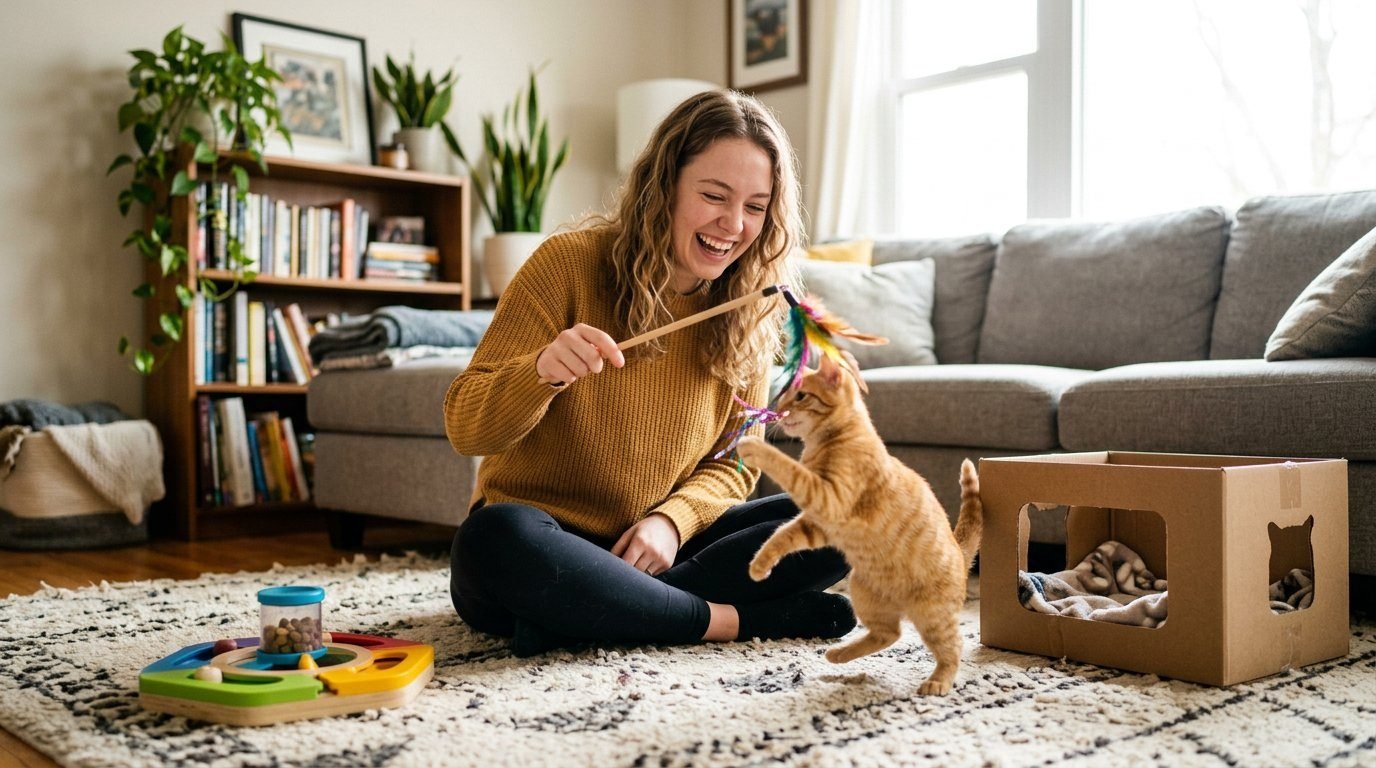
Interactive play is the single most powerful thing you can do. Cats are natural hunters, and play lets them act out the full hunting sequence: stalk, chase, pounce, catch.
How to do it well:
- Aim for two or three short sessions a day of around 10–15 minutes
- Use a wand toy and move it like prey: scurrying away, hiding behind furniture, pausing, then darting off
- Let your cat catch the toy regularly so they don’t get frustrated
- Wind down slowly at the end, then offer a small meal or treat. This mimics “hunt, catch, eat” and helps your cat settle.
2. Use Puzzle Feeders
In the wild, cats work for their food. Puzzle feeders and treat balls make your cat use their brain and paws to get kibble or treats, which turns mealtime into enrichment and can slow down fast eaters.
Start with an easy puzzle so your cat succeeds quickly, then increase the difficulty as they get the hang of it.
3. Give Them a Window View
For indoor cats, a window is like television. Birds, squirrels, people and passing cars provide hours of stimulation.
A window perch or a shelf near the window gives your cat a comfortable spot to watch. Placing a bird feeder outside the window (where it’s safe and allowed) can make the view even more exciting.
4. Add Vertical Space
Cats feel safer and more confident when they can climb and observe from above. Vertical space is especially important in small apartments and multi-cat homes, where it effectively adds more “territory”.
Options include cat trees, wall shelves, the top of a bookcase, or a cleared shelf. For big cats, choose sturdy options. See our guide to the best cat trees for large cats.
5. Provide the Right Scratching Posts
Scratching is a natural, necessary behavior. It keeps claws healthy, stretches muscles and marks territory.
- Choose tall, sturdy posts that don’t wobble, so your cat can fully stretch
- Offer both vertical and horizontal scratchers, as preferences vary
- Place scratchers near furniture your cat already scratches and near where they sleep, since cats often scratch after waking
6. Rotate Toys
Cats get bored of the same toys lying around. Keep most toys put away and rotate a few every week. Old toys suddenly feel new again, at no extra cost.
7. Create Hiding Spots
Cats love enclosed, cozy spaces where they feel safe. Cardboard boxes, paper bags (with the handles cut off), cat caves and tunnels give your cat places to hide, nap and ambush.
A cat tunnel is inexpensive and great for chasing games.
8. Try Cat-Safe Plants and Scents
Many cats enjoy catnip, silver vine or valerian. Offer these occasionally to spark play. Not all cats respond to catnip, and silver vine is a popular alternative.
You can also grow cat grass (wheat or oat grass) indoors. Always check that any houseplant is non-toxic to cats: lilies, for example, are extremely dangerous to cats.
9. Make Mealtimes More Interesting
Beyond puzzle feeders, you can:
- Hide small portions of kibble around the home for your cat to “hunt”
- Scatter a few treats on a cat tree to encourage climbing
- Use a snuffle mat or muffin tin with balls covering the food
10. Set Up a Routine
Cats are creatures of habit. Regular times for play, meals and attention help reduce stress and give your cat things to look forward to.
11. Teach Tricks With Clicker Training
Yes, cats can learn tricks! Clicker training (using a click sound followed by a treat) is great mental exercise. Start with simple behaviors like sit, high five or come.
Keep sessions very short, just a few minutes, and always end on a success.
12. Consider Safe Outdoor Time
If you’d like to give your cat some fresh air safely:
- A catio (enclosed patio) or window box enclosure
- Harness training. Start indoors with a well-fitted cat harness and go slowly.
Never leave a cat unsupervised on a harness outdoors.
13. Try Automatic and Solo Toys
For times when you’re busy or at work, automatic toys (motion-activated or timed), ball tracks and battery-powered moving toys can keep your cat entertained. Rotate them so they stay interesting, and remove any toy that could be a choking or strangulation hazard.
14. Spend Quiet Time Together
Enrichment isn’t only about activity. Many cats love gentle brushing, a lap to sit on, or simply being near you. Let your cat choose how much affection they want.
15. Keep Their Basics Clean and Comfortable
A happy cat needs a comfortable home base:
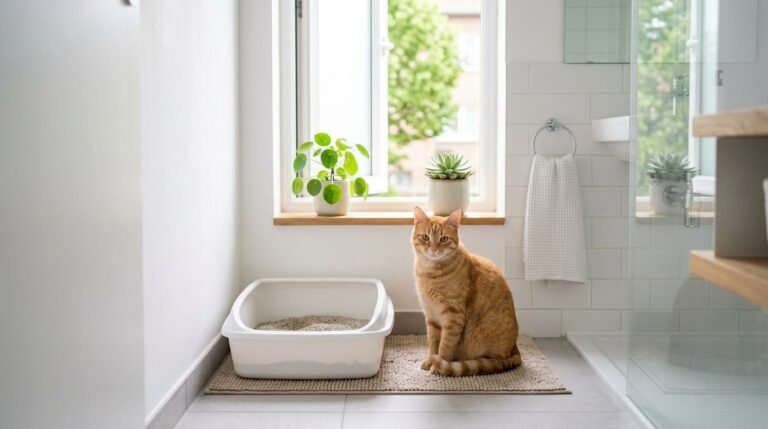
- A clean litter box. A dirty box is stressful. See our guide on getting rid of litter box smell.
- Fresh water, ideally moving water. See our favorite quiet cat water fountains.
- Cozy beds in quiet, warm spots
- Regular vet check-ups to catch health problems early
A Simple Daily Enrichment Routine
Here’s an easy routine that fits around a normal workday:
- Morning (10 minutes): Wand toy play, then breakfast in a puzzle feeder
- Before leaving: Hide a few treats around the home; open the curtains on the window perch
- Evening (10–15 minutes): Interactive play session, then dinner
- Before bed: A short, calm play session and a small snack. This helps many cats sleep through the night.
Frequently Asked Questions
Is it cruel to keep a cat indoors?
No. Indoor cats are protected from traffic, predators, fights and many diseases, and often live longer. The key is providing enough enrichment, play and stimulation to meet their natural needs.
How much playtime does an indoor cat need?
Most cats benefit from at least two short interactive sessions a day, around 10–15 minutes each. Young and high-energy cats may need more.
Do indoor cats get lonely?
Some cats enjoy the company of another cat, while others prefer to be the only pet. If you’re considering a second cat, research careful introductions and make sure you have enough resources (litter boxes, food bowls, resting spots) for both.
What’s the best toy for an indoor cat?
For most cats, a wand toy used by you in interactive play is the most engaging. Puzzle feeders, tunnels and scratching posts are excellent additions.
How do I stop my cat from waking me up at night?
Schedule a vigorous play session in the evening, followed by a meal, and offer a small snack right before bed. Avoid rewarding night-time meowing with attention or food.
The Bottom Line
A happy indoor cat needs chances to hunt, climb, scratch, hide and watch the world. Daily interactive play, puzzle feeders, a window view and some vertical space will make a big difference, often within days.
Start small: pick two or three ideas from this list this week, and watch how your cat responds.
This article is for general information and isn’t a substitute for professional veterinary advice. If your cat’s behavior changes suddenly, please contact your veterinarian.

Written by Jason
IndoorCatGear helps cat owners choose products with confidence. We compare specifications, study independent testing and read through large numbers of verified owner reviews, so you don't have to. Brands can't pay for placement in our guides.