How to Get Rid of Litter Box Smell in a Small Apartment (12 Tips That Actually Work)
Reader-supported: if you buy through links on this page, we may earn a small commission at no extra cost to you. As an Amazon Associate I earn from qualifying purchases. Learn more.
In a small apartment, there’s nowhere for litter box smell to hide. The box might be tucked in a bathroom corner, but the odor drifts into the living room, the bedroom and, most embarrassingly, straight to the nose of every guest who walks through your door.
The good news: a smelly apartment is almost always fixable. Litter box odor usually comes down to a few things: how often waste is removed, what litter you use, the box itself, and where it’s placed. Get those right and your home can smell like nobody owns a cat at all.
Here are 12 practical tips, starting with the ones that make the biggest difference.
📋 In This Guide
- Why Litter Box Smell Is Worse in Small Spaces
- 1. Scoop at Least Once a Day (Twice Is Better)
- 2. Use a High-Quality Clumping Litter
- 3. Keep the Litter at the Right Depth
- 4. Do a Full Litter Change Regularly
- 5. Wash the Box Itself (and Replace It When It's Old)
- 6. Choose the Right Type of Litter Box
- 7. Put the Box in the Right Spot
- 8. Improve the Airflow
- 9. Use an Air Purifier (With the Right Filter)
- 10. Absorb Odor Naturally Around the Box
- 11. Clean Up Accidents With an Enzyme Cleaner
- 12. Make Sure You Have Enough Litter Boxes
- When Smell Could Mean a Health Problem
- Quick Checklist: Odor-Free Apartment
- Frequently Asked Questions
- The Bottom Line
Why Litter Box Smell Is Worse in Small Spaces
Cat urine contains urea. As bacteria break it down, it releases ammonia, the sharp, eye-watering smell most people associate with a dirty litter box. The longer waste sits, the more ammonia builds up.
In a larger home, that odor spreads out. In a studio or one-bedroom apartment with limited airflow, it concentrates. Closed windows in winter, small bathrooms without good ventilation and carpeted floors all make it worse.
So the goal isn’t just to cover the smell. It’s to remove waste faster, trap odor better and move air more effectively.
1. Scoop at Least Once a Day (Twice Is Better)
This is the single most important habit, and no product can replace it.
Once a day is the minimum for one cat. If you have two cats, or you notice smell building up by evening, scoop morning and night. It takes about 60 seconds.
Make it easier:
- Keep the scoop and a small lidded bin right next to the box
- Use a sealed diaper-pail-style disposal bin so scooped waste doesn’t smell up the room
- Attach scooping to something you already do daily, like making coffee or brushing your teeth
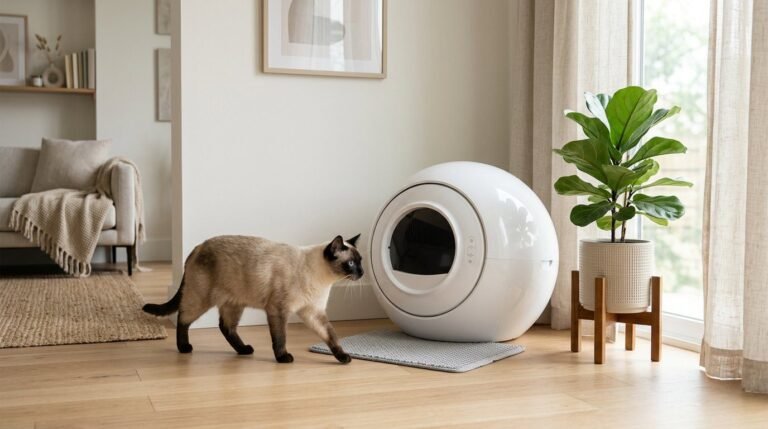
If daily scooping just isn’t realistic with your schedule, that’s exactly the problem self-cleaning litter boxes are designed to solve. Read: Best Self-Cleaning Litter Boxes for Multiple Cats
2. Use a High-Quality Clumping Litter
Your litter choice matters more than most people think.
Clumping clay litter forms solid clumps around urine, so you can remove the source of the smell completely instead of leaving it soaked into the litter. Non-clumping litter tends to hold urine in the box, which leads to faster odor buildup.
What to look for:
- Hard, fast-forming clumps that don’t crumble when you scoop
- Low dust, which is better for small, enclosed spaces and for your lungs
- Activated charcoal or baking soda built in to help absorb odor
A note on scented litter: many cats dislike strong artificial fragrances, and some will stop using the box because of them. Unscented or lightly scented litters with charcoal usually work better, and a cat that uses the box reliably is the best odor control there is.
3. Keep the Litter at the Right Depth
Too little litter, and urine reaches the bottom of the box, where it pools and soaks into the plastic. Too much, and cats kick it everywhere.
For most clumping litters, aim for about 2 to 3 inches of depth. Top up after scooping to keep it consistent.
4. Do a Full Litter Change Regularly
Scooping removes clumps, but small bits of urine and bacteria build up in the remaining litter over time.
As a general guide:
- Clumping litter: empty the box completely and refill every 2–4 weeks
- Non-clumping litter: change it weekly or more often
If the box smells even right after scooping, it’s time for a full change.
5. Wash the Box Itself (and Replace It When It’s Old)
Plastic litter boxes get tiny scratches from claws and scooping. Bacteria and urine settle into those scratches and create odor that no amount of fresh litter can fix.
When you do a full litter change:
- Wash the empty box with warm water and mild, unscented dish soap
- Avoid bleach and ammonia-based cleaners. Ammonia smells like urine to cats and can encourage marking, and harsh chemical smells can put cats off the box.
- Dry it completely before adding fresh litter
Replace plastic boxes about once a year. If your box is heavily scratched or smells even when clean, a new one will make an immediate difference. Boxes made of stainless steel don’t scratch the same way and are much easier to keep odor-free, so they’re worth considering if you’re replacing yours.
6. Choose the Right Type of Litter Box
The box you choose affects how much smell escapes into your home.
- Covered (hooded) boxes can help contain odor and litter scatter, and some include a carbon filter in the lid. The catch: they can also trap smell inside, which some cats dislike. Covered boxes work best when you’re scooping daily.
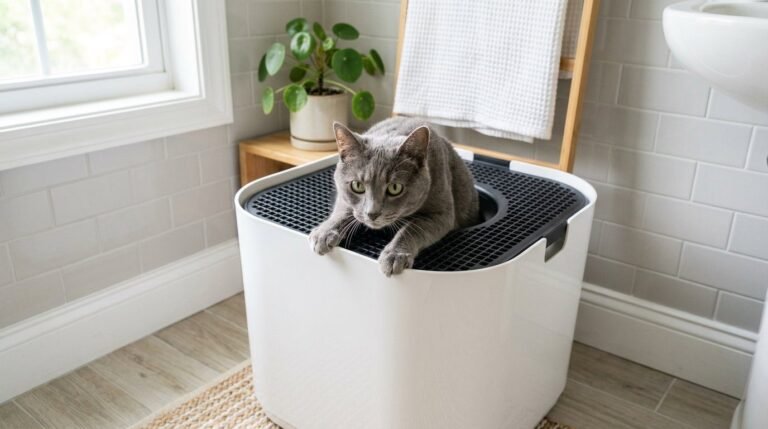
- Top-entry boxes keep litter contained and are popular in small apartments because they also stop dogs and toddlers from getting in. Read: Best Top-Entry Litter Boxes
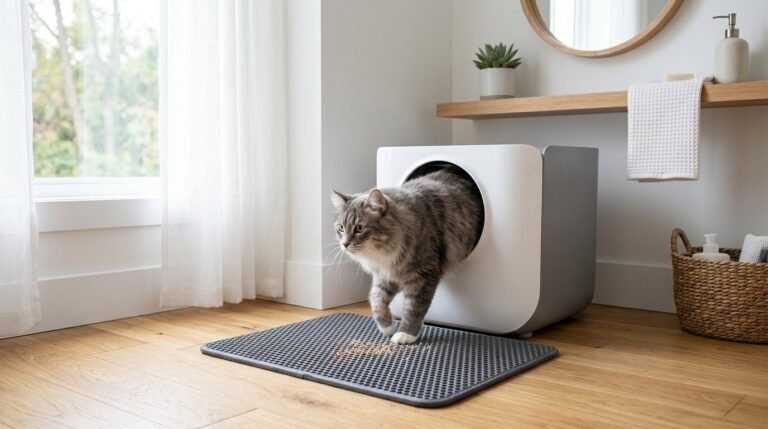
- Self-cleaning boxes rake or sift waste into a sealed compartment shortly after your cat leaves, so waste isn’t sitting out for hours.
- Size matters too. A box that’s too small leads to messy “misses” outside the edges. A common guideline is a box about 1.5 times the length of your cat from nose to base of tail.
7. Put the Box in the Right Spot
In a small apartment, placement is a balancing act between your nose and your cat’s comfort.
Good spots:
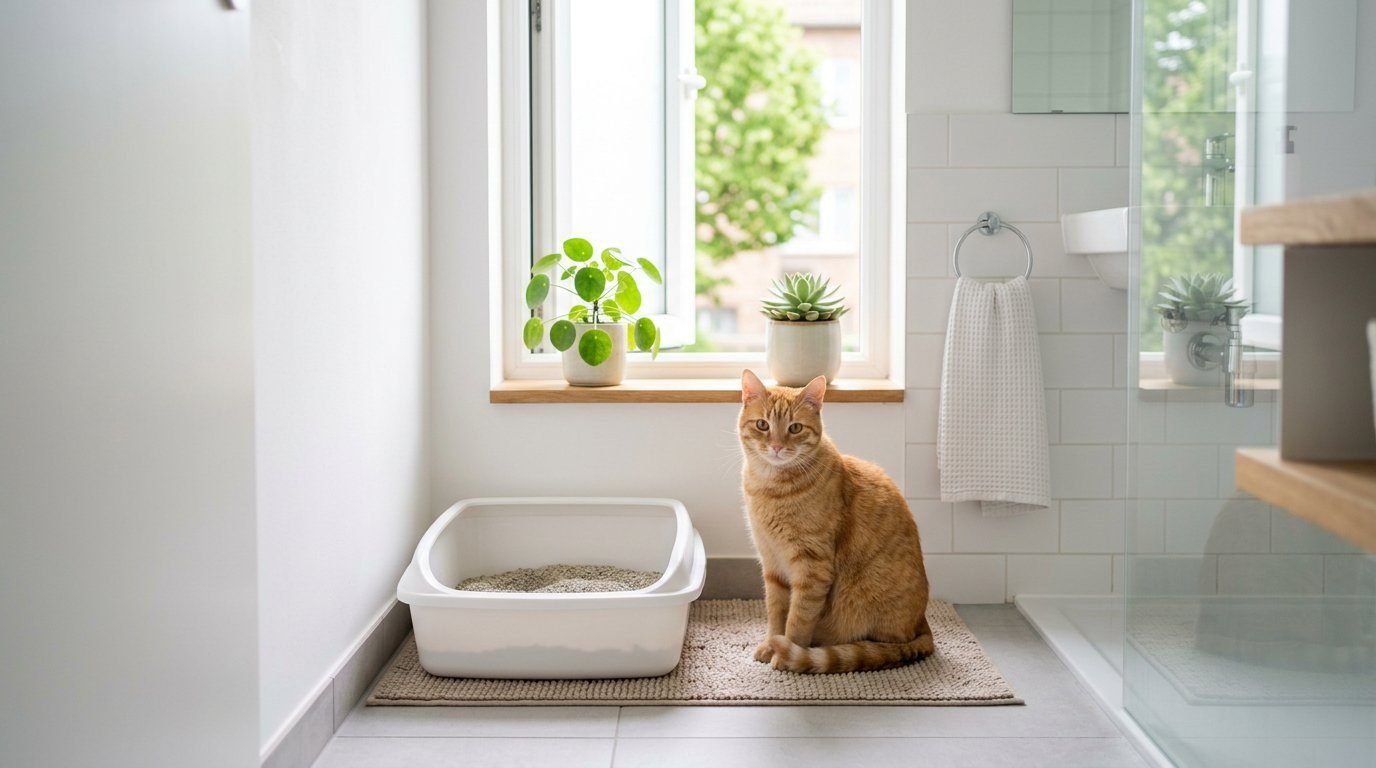
- A bathroom with an exhaust fan (leave the door propped open so your cat always has access)
- A corner of a room near a window you can open
- A hallway nook away from your kitchen and bed
Avoid:
- Closets and tiny enclosed spaces with no airflow, which trap odor
- Right next to your cat’s food and water, because cats don’t like eating near their toilet
- Noisy spots like beside a washing machine, where a sudden noise can scare your cat away from the box
If you hate the look of the box in your living space, litter box enclosures designed to look like furniture (cabinets or side tables) are a popular apartment solution, as long as they’re ventilated and cleaned regularly.
8. Improve the Airflow
Moving air carries odor out instead of letting it settle.
- Run the bathroom exhaust fan a few times a day if the box is in there
- Crack a window when the weather allows
- Keep interior doors open so air can circulate through the apartment
9. Use an Air Purifier (With the Right Filter)
An air purifier near the litter area can make a noticeable difference in a small space. The key detail is the filter:
- HEPA filters capture dust and dander, which is helpful for litter dust
- Activated carbon filters are what actually absorb odors
For litter box smell, look for a purifier that has both HEPA and a substantial activated carbon filter, and one that’s rated for the size of the room you’ll put it in.
10. Absorb Odor Naturally Around the Box
A few inexpensive extras help soak up odor without heavy fragrances:
- Baking soda: sprinkle a thin layer on the bottom of the empty box before adding litter at each full change
- Activated charcoal bags: place one or two near (not inside) the litter box area
- A litter mat: catches litter stuck to paws before it gets tracked, and smelled, around your apartment Read: Best Cat Litter Mats
Avoid relying on plug-in air fresheners and strong sprays near the box. They mask smell for humans while making the area unpleasant for your cat.
11. Clean Up Accidents With an Enzyme Cleaner
If your cat has ever peed outside the box, on a rug, the sofa or a corner of the carpet, that spot may be a hidden source of odor even after it looks clean.
Regular cleaners don’t fully break down the proteins in cat urine. Enzyme cleaners do: they break down the compounds that cause odor, which also stops your cat from being drawn back to the same spot.
Tip: a cheap UV blacklight flashlight will make old urine stains glow in the dark, so you can find spots you didn’t know existed.
12. Make Sure You Have Enough Litter Boxes
A widely recommended rule is one litter box per cat, plus one extra. So two cats would ideally have three boxes.
This can feel impossible in a small apartment, but overcrowded boxes fill up faster and smell much worse. If space is truly limited, at minimum make sure each box is scooped more often, or consider a self-cleaning box that handles multiple cats.
When Smell Could Mean a Health Problem
Sometimes, a sudden change in litter box odor isn’t a cleaning problem at all.
Talk to your veterinarian if you notice:
- Urine that smells much stronger than usual
- Your cat peeing more or less often than normal
- Straining, crying or spending a long time in the box
- Blood in the urine
- Your cat suddenly avoiding the litter box
Urinary tract problems, kidney disease, diabetes and other conditions can change how urine smells or how often a cat goes. A cat straining to pee without producing urine, especially a male cat, is an emergency. Contact a vet immediately.
Quick Checklist: Odor-Free Apartment
- ✅ Scoop at least once daily (twice for multiple cats)
- ✅ Use unscented or lightly scented clumping litter with charcoal
- ✅ Keep litter 2–3 inches deep
- ✅ Fully replace litter every 2–4 weeks
- ✅ Wash the box with mild soap. No bleach or ammonia.
- ✅ Replace plastic boxes about once a year
- ✅ Place the box somewhere with airflow, away from food
- ✅ Run a purifier with an activated carbon filter
- ✅ Clean accidents with an enzyme cleaner
- ✅ One box per cat, plus one
Frequently Asked Questions
Why does my litter box smell even right after I clean it?
Usually the box itself is the problem. Scratched plastic holds bacteria and urine odor. Wash it thoroughly with mild soap, and if the smell remains, replace it. Old urine spots on nearby floors or rugs can also be the real source.
Do covered litter boxes help with smell?
They can reduce how much odor spreads into the room, especially models with carbon filters. However, they trap odor inside, so they need frequent scooping, and some cats refuse to use them.
Is it safe to put the litter box in my bedroom?
It’s safe for most healthy adults if the box is kept clean, but it’s not ideal for odor or sleep, since some cats dig loudly at night. A bathroom or hallway with airflow is usually a better choice.
What’s the best litter for odor control in an apartment?
A low-dust, clumping litter with activated charcoal tends to work best. Choose unscented or lightly scented, since many cats avoid heavily perfumed litter.
Do self-cleaning litter boxes really reduce smell?
For many owners, yes, because they remove waste into a sealed compartment soon after each use instead of leaving it sitting until you scoop. They work best with the litter type the manufacturer recommends, and the waste compartment still needs emptying regularly. Read: Are Self-Cleaning Litter Boxes Worth It?
The Bottom Line
You don’t have to accept a smelly apartment as part of owning a cat. Start with the basics: scoop daily, use good clumping litter, keep the box clean and give it some airflow. Those alone fix most odor problems. Then add an air purifier, a better box or a self-cleaning option if you need more help.
Your nose, your guests and your cat will all be happier for it.
Related: 5 Best Cat Litter Mats to Stop Litter Tracking
Related: Are Self-Cleaning Litter Boxes Worth It?
Related: 5 Best Top-Entry Litter Boxes
This article is for general information and isn’t a substitute for professional veterinary advice. If you’re worried about your cat’s health, please contact your veterinarian.


Written by Jason
IndoorCatGear helps cat owners choose products with confidence. We compare specifications, study independent testing and read through large numbers of verified owner reviews, so you don't have to. Brands can't pay for placement in our guides.